Understanding emission scopes
Scope 1: Direct emissions from sources the UW owns or operates, such as fossil fuels burned in campus buildings, fuel for fleet vehicles, refrigerant and anesthetic gases.
Scope 2: Indirect emissions from purchased electricity.
Scope 3: Indirect emissions associated with University activities but not directly controlled by the UW. This includes purchased goods and services, air travel, commuting, waste, and other activities.
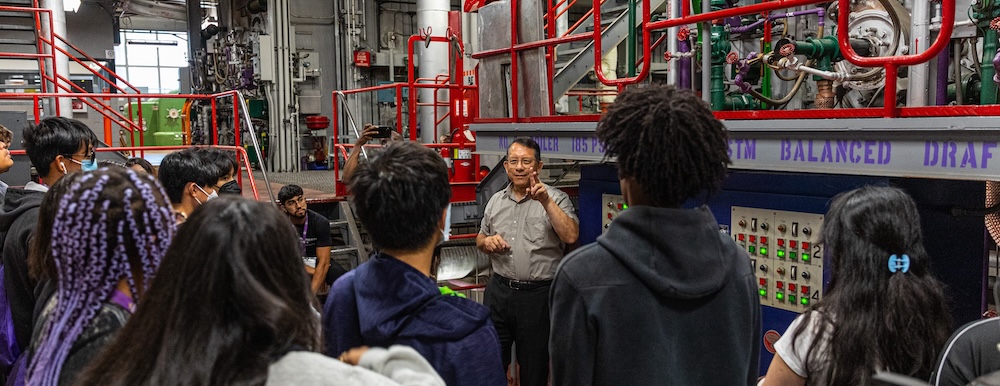
UW’s Scope 1 emissions are primarily driven by fossil fuels used to provide heating and hot water for campus buildings. In 2022, fossil fuel combustion accounted for 97,634 MtCO2e, or 18.5% of UW’s total emissions, making it the University’s second-largest emissions source. Most of these emissions come from natural gas combustion in the Seattle campus’ Power Plant which produces steam for heating, hot water and sterilization for campus buildings, including parts of UW Medical Center– Montlake. Reducing Scope 1 emissions will require continued investment in energy efficiency, electrification, and long-term transformation of campus energy systems.
The UW’s Scope 2 emissions are currently a much smaller part of the University’s footprint because the electric utilities serving UW campuses provide a relatively low-carbon fuel mix, with hydropower being a primary source for electricity in our region. Washington’s Clean Energy Transformation Act will further reduce electricity-related emissions over time by requiring electric utilities to provide greenhouse gas-neutral electricity by 2030 and 100% renewable or non-emitting electricity by 2045.
Scope 3 emissions make up the largest part of UW’s carbon footprint, and are associated with indirect sources such as travel, procured goods and services, construction and food purchasing. The UW’s 2022 Greenhouse Gas Emissions Inventory was the first time the University quantified emissions associated with procurement of goods and services, revealing that this is the largest category of UW’s Scope 3 emissions, accounting for 64% of our total emissions across all Scopes. As a result, this SAP is strategic in addressing emissions from goods and services across multiple focus area actions. Tackling this category of emissions is somewhat new territory, and SAP actions are centered on identifying opportunities to move the needle around low-carbon and sustainable goods procured by the UW.
Because UW’s emissions come from many different systems, decarbonization will require coordinated action across Scope 1, Scope 2 and Scope 3 sources. Many actions in this Plan are designed to reduce direct operational emissions while also building the UW’s capacity to reduce or better manage indirect emissions over time. This includes work on building energy, electrification, sustainable procurement, lower-carbon materials, supplier engagement, commute trip reduction, air travel reduction, lower-impact food purchasing, reuse, compostables and waste prevention. Emerging policy and regulatory drivers also create opportunities for the UW to align operational decisions with broader state and local climate goals.
Decarbonizing University operations is both a climate imperative and an institutional responsibility that aligns with the UW’s values. The new SAP establishes long-term goals to reduce both direct and indirect emissions across the University, while prioritizing near-term actions that are stepping stones toward long-term progress.
The financial and regulatory case for decarbonization is growing. The Seattle campus alone spends approximately $9 million annually on natural gas to provide heat and hot water for the campus and UW Medical Center – Montlake. This does not include the allowances the UW must purchase as a covered entity under Washington’s Climate Commitment Act (CCA). As a large emitter of greenhouse gases, the UW must purchase carbon allowances for its emissions, and these costs are expected to increase under the CCA as a cap-and-invest program. The State Clean Buildings Performance Standard (CBPS) also requires UW facilities to reduce energy consumption and transition away from fossil fuels over time. These policies create opportunities for UW to accelerate building energy efficiency, electrification and emissions reduction across its campuses.