This page is part of an archive of the 2020-2025 Sustainability Action Plan. See the Sustainability Action Plan page for current information.

Transportation accounts for 45% of total carbon emissions in the state of Washington. Reducing the campus drive alone rate reduces greenhouse gases and other impacts on our transportation system, but also increases accessibility for those moving around the community. At all three campuses, the University is committed to developing policies and programs to increase use of sustainable commuting while advocating for increased transportation options with our local, regional, and state agencies.
The target was updated starting in FY2022 to reflect a reduction for Bothell, Seattle and Tacoma campuses. The original target in the FY21 Sustainability Action Plan was “12% or less of commutes are single-occupancy by 2028.”
TARGET Wrap-up

The 2020-2025 Plan set out five-year targets, with annual updates to set out the actions that would be taken that year to reach the target. Over the five years of the Plan, here is a summary of the work towards Target VII:
Progress:
- Provided fully subsidized U-PASS to over 22,000 employees.
- Expanded secure bike storage and improved Burke-Gilman Trail safety.
- Reached a historic 13% drive-alone (SOV) rate in 2022, the lowest ever recorded at UW and among the lowest nationally for a major university.
- Adjusted the target in 2022 to reflect campus-specific baselines.
By-the-Numbers:
- In 2023, the drive-alone rate increased slightly to 16.3% and to 16.6% in 2024.
- The 2028 goal for Seattle is a 12% drive-alone rate.
Status: On track. UW has made significant investments in transit access, most notably by expanding the fully subsidized U-PASS to employees. Single-occupancy commuting has slightly increased post-pandemic (16.6% in 2024 vs. 13% in 2022). This reflects broader regional challenges, including fluctuating transit service and hybrid work patterns. Meeting the 2028 target of 12% will require more education and community engagement on the benefits of transit, enhancements to biking and pedestrian infrastructure, and close collaboration with transit agencies.
Annual actions
Under the 2020 Sustainability Action Plan, each fiscal year the UW updated the Actions to be taken to work toward the Targets. This is an archive of the Actions adopted. The UW fiscal year runs from July 1 to June 30 and is named for the year it ends. For example, fiscal year 2025 started on July 1, 2024 and ended on June 30, 2025.
Action: Enhance sustainable transportation outreach to the campus community
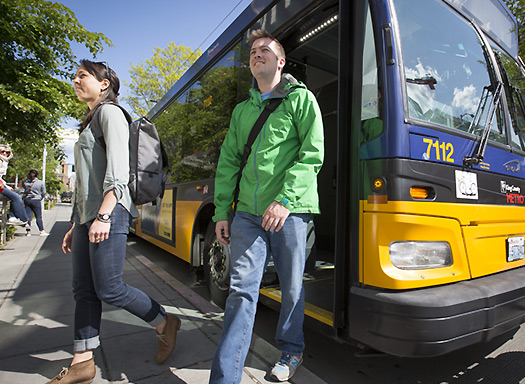
In the year ahead, the University aims to bolster its sustainable transportation outreach efforts. This will involve hiring a dedicated outreach individual who will focus on strengthening communication with transit partners and engaging more fully with the campus community. This role will be pivotal in promoting the U-PASS and encouraging active transportation options.
Additionally, transit representatives will be invited to University events to discuss transit options with commuters and promote vanpool programs. The U-PASS newsletter will also be reintroduced, along with other communication channels, to communicate information on transit news, options and the promotion of sustainable transport options.
Action: Improve bicycle parking solutions and accessibility
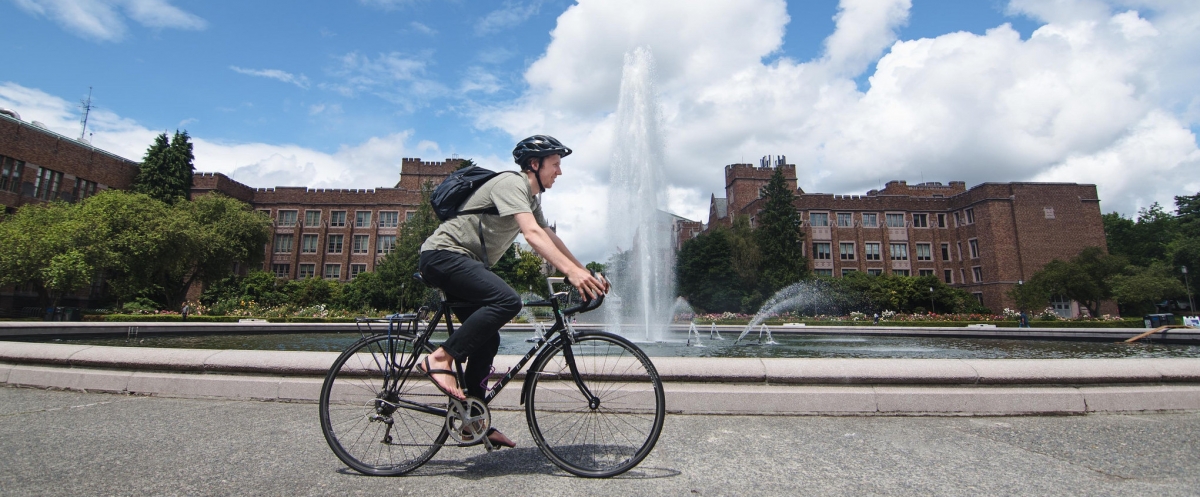
UW Transportation Services plans to evaluate new bicycle locker options to replace the aging lockers on the south Seattle campus. Construction of a new bike house at UW Medical Center is set to continue, with completion expected early in 2025. The design and planning of several additional bike houses on campus will also be prioritized.
To make secure bicycle parking more accessible and equitable, Transportation Services reduced secure bicycle parking fees in October 2024. This initiative aims to encourage active transportation on campus.
UW Bothell also plans to explore bike storage options, such as bike lockers, as a way to offer more secure bike storage on campus.
Action: Continue progress on Burke-Gilman Trail improvements
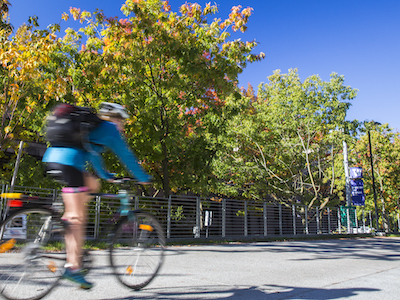
The University of Washington will continue its efforts to secure federal and state grant funding to support safety and accessibility improvements on the Burke-Gilman Trail. Focus will be on identifying and addressing additional areas on the trail that require safety enhancements, ensuring a secure and efficient route for all users.
Action: Advocate for increased transit hours beyond peak commute times
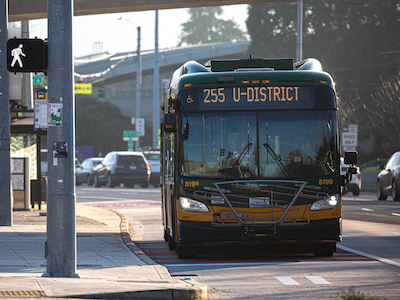
Transportation Services will work with our partners in regional transit organizations to expand transportation options and availability in off-peak hours to and from campus, allowing students, staff and faculty greater ability to utilize transit throughout the day, especially in earlier and later hours which may not currently be well-served.
In addition, Transportation Services will increase promotion and support of area Vanpool programs. These programs are offered by most of the surrounding counties and are covered by the fully subsidized U-PASS program, making them a viable option for many commuters. Vanpools may offer staff a more convenient option in the times when public transit is limited.
Action: Adopt a Bicycle Parking Plan
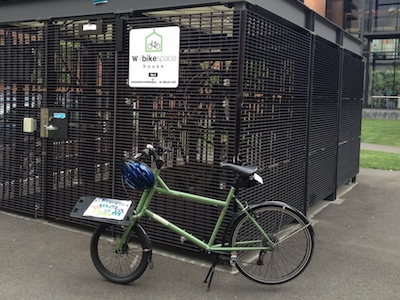
Transportation Services and Campus Architecture & Planning are working to complete a Bicycle Parking Plan, which is expected to be completed by the end of calendar year 2023. The Bicycle Parking Plan will provide operational recommendations to reduce parking waitlists and provide more secure parking in needed areas, with the overall goal of increasing the number of bicycle commutes to campus.
The Bike Parking Plan will address safe, secure and convenient parking by creating criteria for identifying sites and the types of parking to be added; and increasing and optimizing the locations of long-term secure parking (such as bicycle houses and lockers) as well as short-term racks. The Plan will also provide recommendations for replacing existing outdated racks with higher-quality bike racks and prioritizing specific places with high demand, and develop a process to integrate bicycle parking with future development projects being planned on campus.
Action: Update the Burke-Gilman trail
The University of Washington Project Delivery Group is examining possible improvements to the Burke-Gilman Trail through campus. Two sections have been identified where there trail will be widened and lane separation added for cyclists and pedestrians, similar to existing sections along NE Pacific St. Upgrades for these sections are both currently in the design process.
Action: Encourage sustainable transportation options
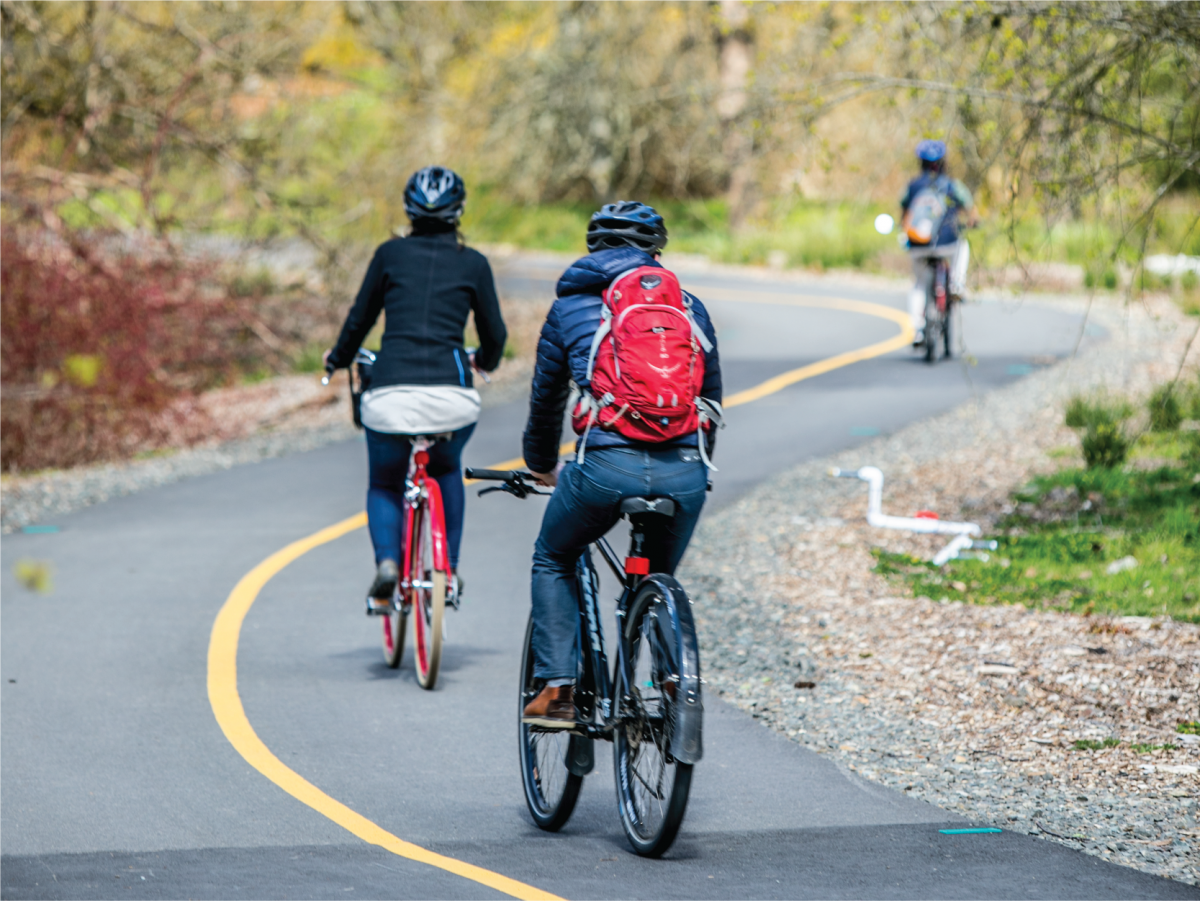
Steps we will take in FY 2023
- Advocate for increased transit service levels
- Implement free transit fares for 18 and under
The fully-subsidized U-PASS for all employees was approved in the Spring and was effective July 1, 2022. This expansion covers an additional 22,000 employees across all campuses and medical centers, giving them subsidized access to most public transit options in our region.
Transportation Services will continue to advocate for increased transit service levels from regional partners to provide commuting options for all employees and students.
This fall, Transportation Services will also work to implement free transit fares for students and staff 18 years old and under, in accordance with new state policy.
Action: Improve active transportation infrastructure and access
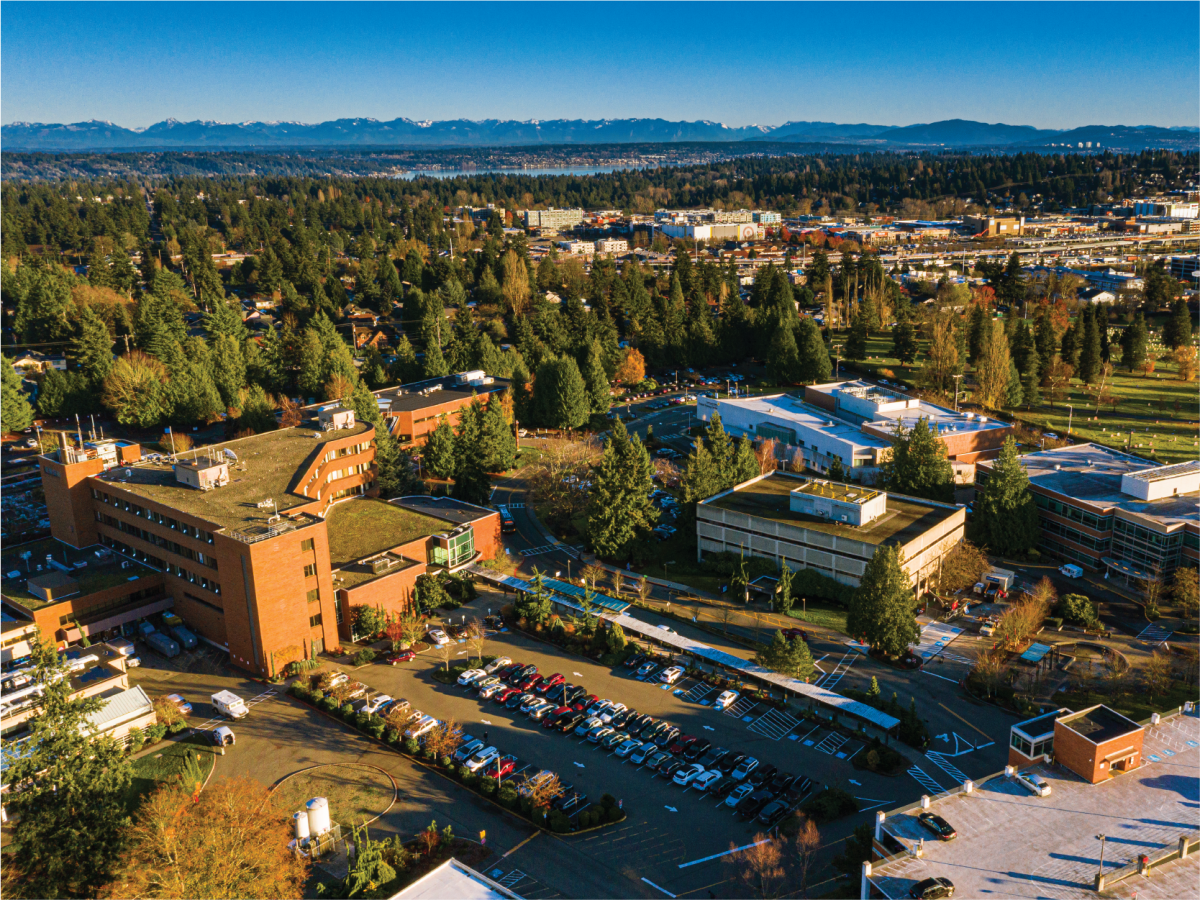
Steps we will take in FY 2023
- Complete a long-term bicycle parking plan for the Seattle campus
- Launch scooter share
Transportation Services will complete a long-term bicycle parking plan for the Seattle campus. This study includes an evaluation of the current bike locker program to determine technology improvements to improve utilization and customer experience. They will expand bike parking options by opening three new bike houses on the Seattle campus, providing expanded capacity for 150 bicyclists. They are also evaluating the parking infrastructure at the Bothell campus.
Transportation Services expects to launch scooter share vendor operations on the Seattle campus, with contracts similar to existing bikeshare agreements.
Action: Promote U-CAR and UW Shuttle service for mid-day travel
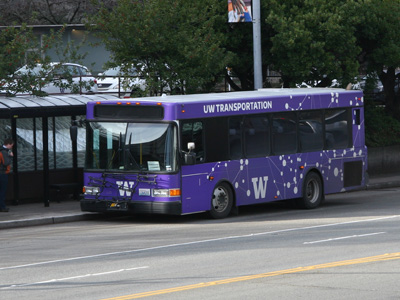
Steps we will take in FY 2023
- Develop and implement a marketing plan for UW Shuttle services to UW Medical Center employees and patients.
- Develop and implement a marketing plan for U-CAR service at all three campuses.
Transportation Services will develop and implement a marketing plan for U-CAR service on all three campuses, and develop and implement a marketing plan encouraging use of UW Shuttle services to UW Medical Center employees and patients.
Action: Encouraging sustainable transportation options and telework post COVID-19
COVID-19 has had a significant impact on the travel behavior of our campus communities. Since the pandemic, the majority of students, staff and faculty have been learning or working from home. For those coming to campus, the availability and safety of shared transportation options (transit, carpooling, etc.) has compelled many to drive alone to campus.
With this disruption to the typical commute, there is an opportunity to change people’s travel behavior to more sustainable modes as they begin to return to campus.
Steps we will take in FY 2022
- Track research on transit recovery and COVID-19 transmission on transit, sharing findings with the campus community.
- Develop an outreach and education campaign promoting active and shared transportation options.
- Provide resources to encourage continued telework arrangements for employees that are able to work remotely.
- Advocate for increased transit service levels.
Responsible party
UW Transportation Services departments at Bothell, Seattle and Tacoma
Statuses and linkages
Target I: Double Student, Staff and Faculty Sustainability Engagement by 2024
UW Transportation Services meets with UW Sustainability at least quarterly to discuss promotion of sustainable transportation options and programming.
Target III: Double Sustainability Oriented Research Projects by 2025
Transportation Services participated in two Sustainability Studio projects each year to help research opportunities to increase sustainable transportation usage on campus. Transportations Services is partnering with PacTrans on research of commuting by essential workers during COVID-19.
Target V: 5% Lower Emissions from Professional Travel by 2025
Both targets are looking at opportunities to increase remote work and conferencing options to decrease carbon emissions from travel.
Financing
- Programs to support reducing single-occupancy vehicle commuting are already funded through a combination of parking revenue, student and employee fees, and institutional funding.
Metrics
- The Seattle campus conducts an annual transportation survey of staff, faculty and students to learn about their commuting behavior. Progress toward this Action will be tracked through the continued administration of the annual transportation survey.
- Each year the Bothell campus does an intercept survey to find the mode split, although the 2020 survey was suspended due to minimal traffic caused by the pandemic.
- The Bothell and Tacoma campuses both conduct biennial transportation surveys of staff and faculty through the Washington State Commute Trip Reduction program.
Action: Evaluate expansion and demand of daily parking options
Providing daily parking options to students, staff and faculty allows them to save money every time they do not drive to campus. This can encourage commuters to use sustainable transportation options on the days that they do not need to drive to campus.
Steps we will take in FY 2022
- 1. Expand Pay-Per-Use Parking (PPUP) to the S1 garage on the Seattle campus.
- Evaluate daily parking permit options at the Tacoma campus.
- Adjust demand for daily parking by focusing on reducing quarterly permit sales volume at the Bothell campus.
Responsible party
UW Transportation Services departments at Bothell, Seattle and Tacoma
Statuses and linkages
Daily parking options are currently available to employees on the UW Seattle campus through Pay-Per-Use Parking (PPUP) at gated facilities and daily parking permits available for purchase online for non-gated facilities. Daily and hourly visitor parking options are available at all three campuses.
Financing
- Parking operations are funded through the sale of parking permits and products at each campus.
Metrics
Progress toward completion of the Action will be measured by:
- Number and type of parking permits sold.
- Utilization of parking facilities.
Action: Promote U-CAR and UW Shuttle service for mid-day travel
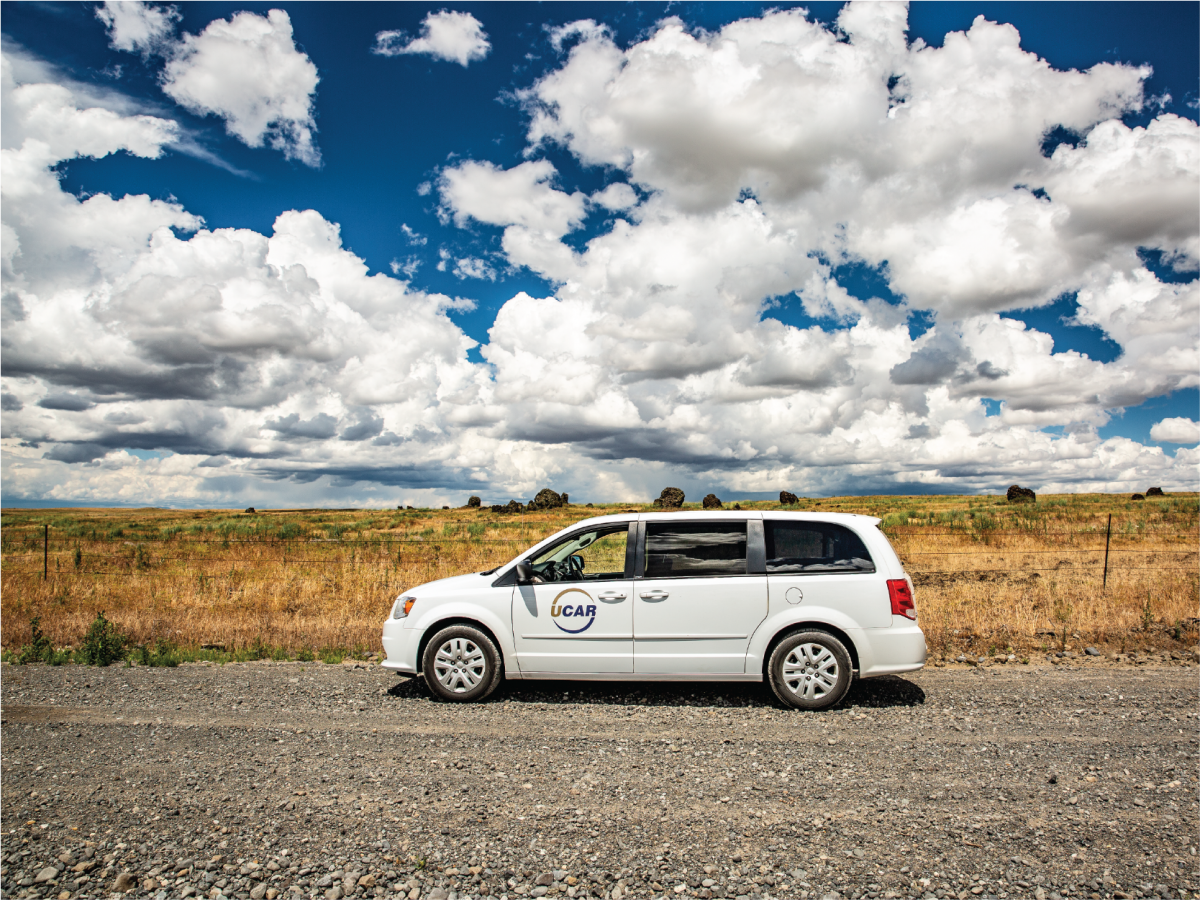
The Transportation Services Shuttles service provides a vital connection for faculty and staff between campus and medical facilities across the city. The U-CAR program provides a critical function to allow campus community access to a vehicle for business-related trips. Both of these services allows staff, faculty and students to use commute options other than driving alone and still be able to complete the work they need to without having to bring their personal vehicle to campus, helping to reduce carbon emissions related to transportation.
Steps we will take in FY 2022
Develop and implement a marketing plan for UW Shuttle services to UW Medical Center employees and patients. 2. Develop and implement a marketing plan for U-CAR service at all three campuses.
Responsible party
UW Transportation Services at Seattle
Statuses and linkages
Target X: 45% reduction of greenhouse gas emissions by 2030
Exploring opportunities to transition UW Fleet to electric vehicles and capacity for parking to house solar canopies.
Financing
- UW Shuttles are funded through partnerships with UW Medical Center, Harborview, School of Medicine, Fred Hutchinson, Seattle Cancer Care Alliance, and Seattle Children’s Hospital. The program is also funded through parking revenue and institutional funding.
Metrics
Progress toward completion of the Action will be measured by:
- Ridership numbers on shuttle services.
- U-CAR rentals, mileage and utilization.
Action: Promote Commute Options Toward SOV Reduction

The University of Washington is committed to managing the environmental impacts of transportation. This commitment has resulted in one of the lowest single occupancy vehicle (drive-alone) rates for universities nation-wide.
In the 1970s, the University implemented programs such as the Health Sciences Express, developed computerized ride-matching software, began subsidizing transit passes, and provided incentives to encourage students to carpool. Since then, UW has incrementally built upon these successes and leads nationally in transportation demand management.
Started in 1983, the University committed to managing its transportation impacts and formalized its Transportation Management Plan intended to expand commuting options for University students, staff, and faculty, and to shift travel habits away from single occupancy vehicles.
Since the 2003 Campus Master Plan, the University has continued its commitment to sustainably address transportation choices, while meeting demands for campus growth and adjusting to changing transportation options serving the campus. With the 2019 Campus Master Plan, the goal is to reduce carbon emissions from single-occupancy vehicles less than 12% by 2028.
Steps we will take in FY 2021
- Complete a Transportation Needs Assessment of the campus community to develop specific transportation mode targets and strategies.
- ContinuetopromotetheU-PASSprogramtostudents,staffand faculty. Provide a fully-subsidized U-PASS to additional staff.
- Construct 2 new bike houses on campus to provide secure bicycle parking.
Responsible party
Transportation Services
Statuses and linkages
The University of Washington provides a comprehensive Commute Options program to help staff, faculty and students choose sustainable transportation modes to commute to campus:
- Discounted or fully-subsidized U-PASS transit pass program
- Secure bicycle parking facilities located throughout campus
- Free helmet program
- Free parking for vanpools, discounted parking for carpools
- Partnerships and discounts for bikeshare and carshare
Transportation Services also provides outreach and education to our campus community to provide personalized trip planning sevices:
- Personalized commute planning
- New Employee Orientation participation
- Dawg Daze participation
- Earth Day Fair participation
- Bicycle encouragement campaigns twice a year (Ride in the Rain, Bike Everywhere Month)
The University also advocates for and supports increased transit service and bicycle/pedestrian infrastructure in the U-District and regionally to support more sustainable transportation options.
Financing
Programs to support reducing SOV programming to support the reduction of single-occupancy vehicle commuting is funded through a combination of parking revenue, student and employee fees, and institutional funding. The FY21 budget for Commute Options programming, including the U-PASS, is $20,590,000.
Metrics
The University conducts an annual transportation survey of staff, faculty and students to learn about their commuting behavior. Based on the 2019 Annual Transportation Survey, the current SOV rate is 18.2%. Progress toward this Action will be tracked through the continued administration of the annual transportation survey.
This action may induce an indirect points gain in STARS credit OP-16 Commute Modal Split where UW shows a point gap of 0.84.
Action: Promote Car Shares and UW Shuttle Service
The Transportation Services Shuttles service provides a vital connection for faculty and staff between campus and medical facilities across the city. The U-CAR program provides a critical function to allow campus community access to a vehicle for business-related trips. Both of these services allows staff, faculty and students to use commute options other than driving alone and still be able to complete the work they need to without having to bring their personal vehicle to campus, helping to reduce carbon emissions related to transportation.
Steps we will take in FY 2021
- UW Shuttles exploring Shuttle Routes to support Intra-Campus Mobility
- Review impacts of COVID-19 on shuttle and U-Car services.
Responsible party
Transportation Services
Statuses and linkages
UW Shuttles carries over 601,400 riders annually. This service transports students, faculty, staff and medical commodities to UW Medical Center Montlake, Harborview Medical Center, Seattle Cancer Care Alliance, Fred Hutchinson Cancer Research Center, UW Medicine in South Lake Union, UW Medicine on Roosevelt Way and Seattle Children’s Hospital. On top of these medical shuttles, the team operates a nighttime shuttle and an accessibility-assistance shuttle for students, staff, and faculty. These services are provided to the community at no-cost to the rider.
In 2020, there are 110 U-Cars that support business-related carsharing on all UW campuses. There are also 12 Zipcars on the UW Seattle campus to support personal carsharing trips for staff and students.
Financing
UW Shuttles are funded through partnerships with UW Medical Center, Harborview, School of Medicine, Fred Hutchinson, Seattle Cancer Care Alliance, and Seattle Children’s Hospital. The program is also funded through parking revenue and institutional funding.
Metrics
- We track the ridership numbers on all shuttle services (HSE, SCCA, SLU, Dial-A-Ride, and Night ride) on a weekly basis when services are operating. We track the number of unique car share rentals, UCAR mileage, and their utilization on a monthly basis. We do not have the ability to determine if a car share is used to move multiple individuals in a trip.

See the full plans
Status updates
Target actions for FY2024
- Advocate for increased transit hours beyond peak commute times
- Adopt a Bicycle Parking Plan
- Update the Burke-Gilman Trail
Advocate for increased transit hours beyond peak commute times
The University of Washington has been working to improve transit options to better serve its campus community, particularly during off-peak hours. Through frequent communication with regional transit agencies, including weekly, monthly, and quarterly meetings, the University has been able to stay informed about transit changes and push for more accessible transportation options.
Progress is rolling forward on this initiative, as shown by King County Metro Service expansion in September 2024. The transit agency plans to add 3,700 new bus trips per week, with a focus on enhancing night and weekend services. This represents an overall increase of 5% in transit service, with an 8% increase during nights and weekends. This expansion will address the needs of many in the UW community who require transportation beyond standard business hours for evening classes, night shifts, and other campus activities.
Despite these improvements, the University has noticed a concerning trend: an increase in single-occupancy vehicle (SOV) usage. This increase is likely attributed to the implementation of return-to-work policies.
The rise in SOV usage presents a challenge to the University's sustainability goals and efforts to reduce campus traffic congestion. It underscores the need for continued advocacy and collaboration with transit agencies to further increase service frequency, reliability, and coverage.
Adopt a Bicycle Parking Plan
In fiscal year 2024, the University of Washington completed and approved a comprehensive Bicycle Parking Plan. This strategic document outlines several initiatives aimed at enhancing bicycle infrastructure and accessibility across the campus. The plan addresses three primary areas of focus:
- Bike Locker Renewal: A strategy was developed to assess and replace aging bike lockers, ensuring secure and reliable storage options for cyclists.
- Bike Rack Rebalancing: The plan proposes a redistribution of bike racks throughout the campus to optimize utilization and meet changing demand patterns.
- New Bike Houses: Introduction of plans for new bike houses on campus, providing additional protected parking options for cyclists.
Update the Burke-Gilman Trail
The University of Washington is taking significant steps to enhance safety and accessibility on the Burke-Gilman Trail. UW’s Transportation Services and Project Delivery Group are working together to secure both federal and state grants for improvements to a key section of the trail.
The project focuses on the stretch of the Burke-Gilman from Rainier Vista to the Hec Ed bridge. The design, which is nearing completion, proposes two major enhancements: lane separation and trail widening. These improvements aim to address longstanding concerns about user safety and congestion on this popular multi-use path.
Target actions for FY23
- Encourage sustainable transportation options
- Improve active transportation infrastructure and access
- Promote U-CAR and UW Shuttle service for mid-day travel
Encourage sustainable transportation options
The fully subsidized U-PASS for all employees was approved in the Spring and was effective July 1, 2022. This expansion covers an additional 22,000 employees across all campuses and medical centers, giving them subsidized access to most public transit options in our region. The 2022 campus commute trip reduction survey, published in May 2023, shows that UW reached a 13% drive alone rate, one of the lowest in the nation.
Transportation Services implemented free transit fares for students and staff 19 years old and younger, in accordance with new state legislation. Students 19 and under had their U-PASS fee refunded or waived starting in Fall and continuing through the year.
Transportation Services has continued to advocate for increased transit service levels from regional transit providers to provide commuting options for all employees and students 24 hours a day, 7 days a week, 365 days a year.
Improve active transportation infrastructure and access
Transportation Services opened three new bike houses on the Seattle campus, increasing secure bike parking by over 150 spots.
Promote U-CAR and UW Shuttle service for mid-day travel
Transportation Services continues to improve the visibility and marketing of our Shuttles and U-CAR services by marketing these programs on campus in UW newsletters and publications. UW Transportation puts a special emphasis on marketing the Nightride shuttle service at the end of each quarter. This is an especially relevant time to raise awareness of the Nightride service, as students are regularly on campus in later evening hours as they prepare for finals week.
Target actions for FY22
- Encouraging sustainable transportation options and telework post COVID-19
- Evaluate expansion and demand of daily parking options
- Promote U-CAR and UW Shuttle service for mid-day travel
Encouraging sustainable transportation options and telework post COVID-19
The U-PASS program provides Husky Card holders with unlimited rides on regional transit systems. Most students on the Seattle and Tacoma campuses are automatically part of the program, and Bothell students can opt-in. The student U-PASS was temporarily suspended for the 2020-2021 school year when most classes were remote, but was reinstated for 2021-2022.
In Spring 2022, the UW updated the Transportation Services funding model to move employee transit costs to the central University benefits fund, allowing the institution to provide a fully-subsidized U-PASS for all faculty and staff starting in FY23. This provides easy access to public transportation options for nearly all UW employees.
UW Transportation Services monitors transit recovery on a monthly basis, reporting to the University Transportation Committee at each meeting. The UW has advocated for increased transit service levels through the East Link and North Link public review processes as a member of the process review board.
Transportation Services also received permits to build three new bike houses on the Seattle campus, expanding the parking and support infrastructure to encourage bike commutes.
Evaluate expansion and demand of daily parking options
New gate arms were installed at the South Campus Garage on the Seattle campus to allow pay-per-use parking implementation in FY23, expanding the number of pay-per-use options, which is a best practice for parking management to reduce single-occupancy vehicle trips and maximizing parking space utilization.
Transportation Services continues to review parking demand at all three campuses to determine how best to implement daily parking options.
Promote U-CAR and UW Shuttle service for mid-day travel
Transportation Services implemented improved routing of the shuttles to better service UW Medical Center - Montlake patients and employees. They are also reviewing U-CAR key management software vendors for implementation in FY23 to improve the customer experience.