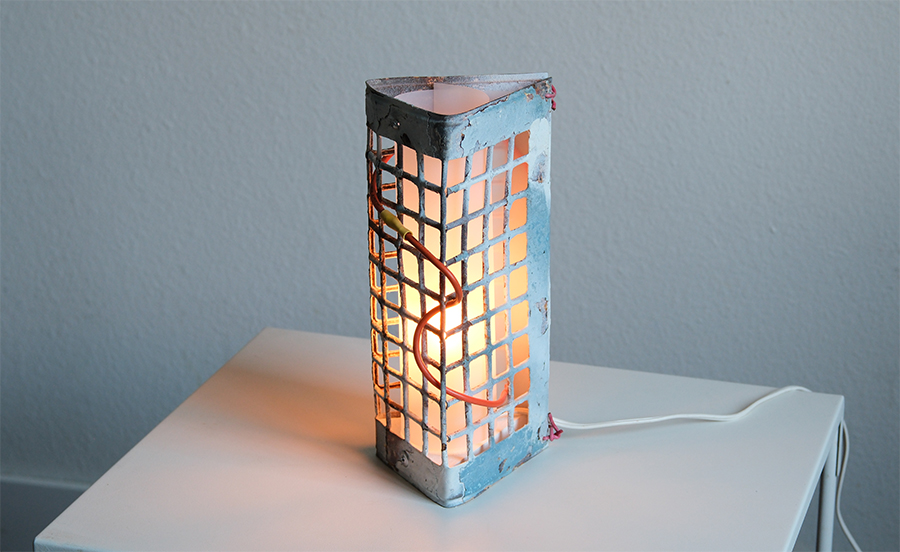
Artists reimagined their waste into dynamic artwork in UW Recycling’s 2026 Trash Art Contest. Winning pieces ranged from a messenger bag made entirely of plastic bags to a lamp constructed from abandoned boat pieces retrieved from Puget Sound.
The contest prompts participants to construct artwork from items normally thought of as trash. Part of the submission process encourages artists to reflect on their personal waste or waste they see in their environment. This year’s winners effectively connected their individual art pieces to larger themes of sustainability.
“The more people are exposed to creative reuses, the more they question their own consumption habits,” said Asher Jayme, the first place winner of the Textile art category. “I want to instill in people the idea that everything has a purpose, you just have to find it.”
This year’s contest received 19 submissions from UW students and staff. Over the last seven years, artists from around the UW have created and submitted over 165 original pieces of art to the contest. Some artists submit new pieces to the contest multiple years, recontextualizing their trash in new ways. Two returning artists make up this year’s winners: Greg Olsen and Louise Wackerman.
Contest winners
The contest’s selection committee chose six winners in the three categories. Click the name of the artwork to read the artwork's description below.
3D art category
- Rusty Lamp by Leo Carmona
- Kaptain Kleen by Peter Brodsky
2D art category
- Consume, Consume by Alma Watson
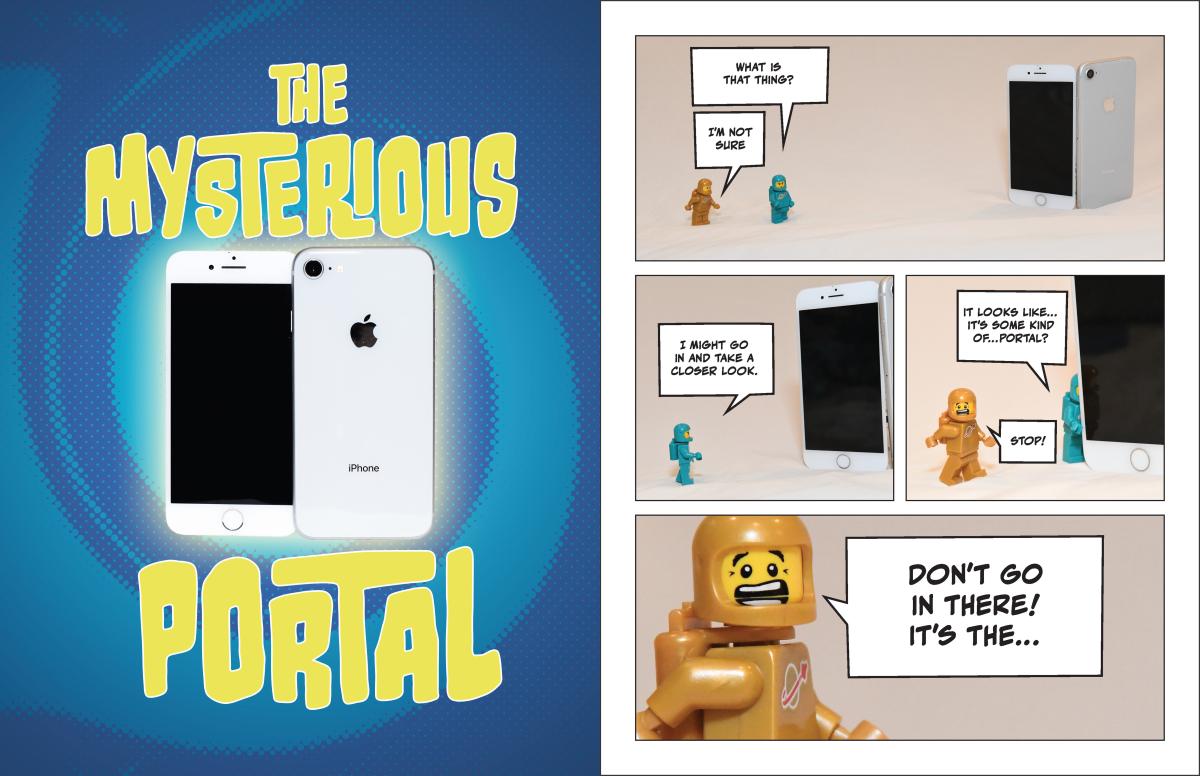
- The Mysterious Portal by Greg Olsen
Textile art category
- Transformative Trash by Asher Jayme
- Worn Again by Louise Wackerman
Click the slideshow below to view all the 3D, 2D, and textile art submissions.

The winning art pieces in each category are highlighted in detail below. They will also be displayed in an exhibit on the second floor of Odegaard Undergraduate Library from April 23 – May 15, 2026.
All details below submitted by the artists.
3D Art category
Sculpture, model or other pieces that stand upright
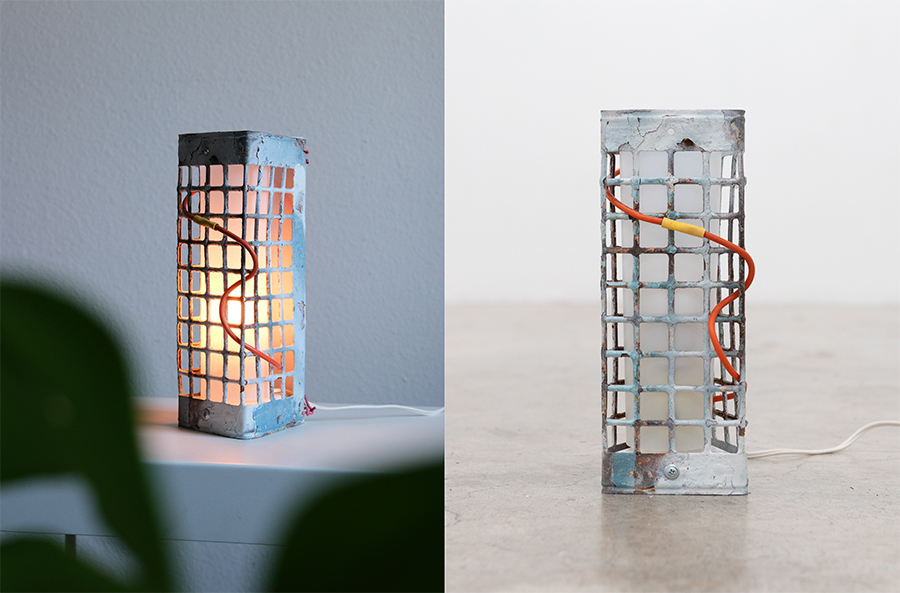
1st place winner: Rusty Lamp by Leo Carmona
View some of the artist’s work: leocarmona.com
Artwork Description
This lamp was created using primarily fragments of abandoned boats from the Puget Sound and inspired by the forms, colors, and textures found in marinas throughout the Sound. The goal was to transform discarded materials into a functional piece that serves as a conversation starter about environmental responsibility, while also highlighting the potential of “waste” to become elegant objects with a story. I also hope it invites reflection on our own relationship with our waterways.
How is your art piece relevant to your personal waste and/or waste you see at the UW?
For the past three years, I have collected discarded materials and repurposed them into art and functional objects, often gathering waste from the UW art building like wood scraps, packaging, and disregarded office supplies. While this piece does not directly use materials sourced from UW, it emerges from the same sense of grief at the volume of waste I witness there. It reflects my critique of our extractive and excess-driven culture, and expresses my commitment to reuse as an essential, everyday practice.
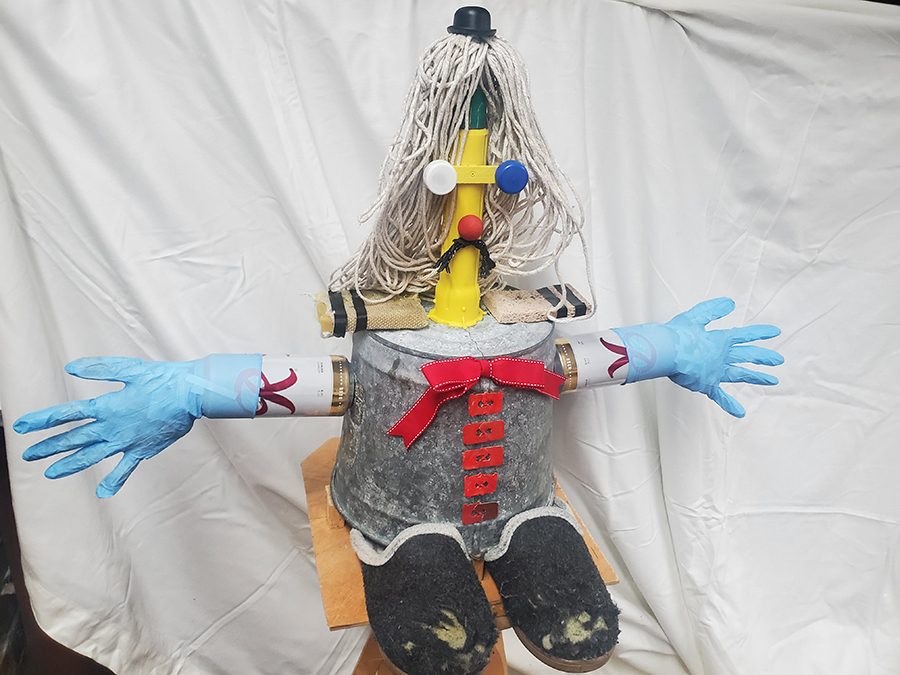
Image description: Kaptain Kleen’s body is made from a large gray metal bucket, with a mop face and a bundle of string mop strands for hair. Beer can arms extend from the sides of the bucket, with blue latex gloves representing hands. Kaptain Kleen’s face and nose are made with plastic bottle caps, accented by a handlebar mustache of plastic material. Two torn household slippers keep the Kaptain grounded and standing at attention. The captain’s outfit denotes their military experience with a tiny cap on top of their mop hair, two sponge epaulettes, red buttons made from bread bags and a red ribbon necktie.
2nd place winner: Kaptain Kleen by Peter Brodsky
Artwork Description
Kaptain Kleen came about while mopping a bathroom floor. I started thinking of how quickly and easily we decide that cleaning supplies must be disposed of early and without recycling. It is a montage of such items which themselves are now trash. In addition, I wanted to include items that are trashed en-masse without any thought to where they ultimately go; in particular the latex gloves. And I like beer...
How is your art piece relevant to your personal waste and/or waste you see at the UW?
I am particularly struck by how much waste I see produced by the medical industry. In its efforts to keep us safe it produces massive quantities of trash which cannot be recycled - the latex gloves are the most obvious example of that. This is also true of other laboratory by-products. My job in ocean science puts me in proximity to a depressing volume of trash in the sea. Surely there's some way to balance safety while reducing this scourge.
2D art category
Pieces that may be hung on a wall like painting, photography, collage or comic-style works
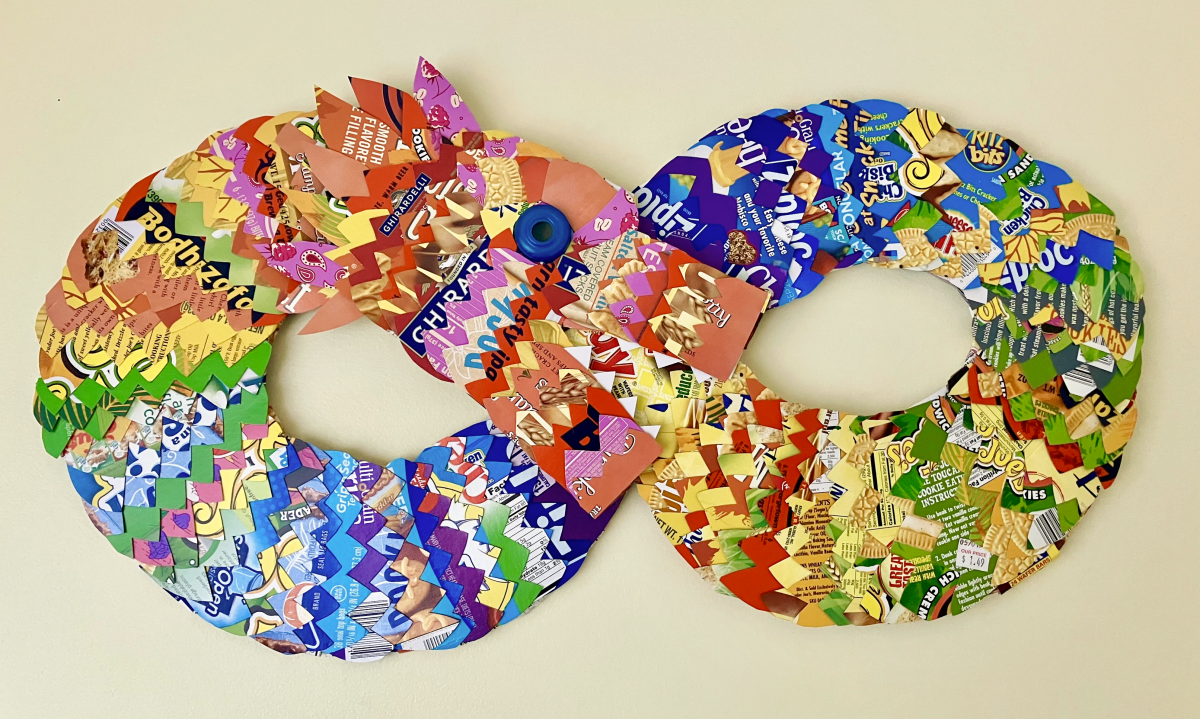
Image description: Colorful cardboard food packaging cut as zigzag scale layers create an ouroboros, or snake eating its own tail. The snakes head is distinguished by different texture paper, an eye made of plastic and an open mouth that intersects its middle.
1st place winner: Consume, Consume by Alma Watson
Artwork Description
The Ouroburos - a snake eating its own tail- is a symbol of infinite cycles. Consume, Consume illustrates how in order to live, we need to eat, and in order to eat, we produce waste. The scales of the snake are made of cardboard food packaging. All the food contained in the boxes was eaten, and still so much was left behind.
How is your art piece relevant to your personal waste and/or waste you see at the UW?
Almost all of the cardboard in this piece was accumulated by my household during the time it took to create it. I ended up using the literal endless cycle of all the trash that goes through my house to depict a symbol of infinity. I was also inspired by the amount of cardboard boxes we receive from shopping online- that cardboard makes up the foundation that the scales are attached to.
View the full 6-page comic PDF
2nd place winner: The Mysterious Portal by Greg Olsen
Artwork Description
For several years, an old iPhone sat discarded in a living room drawer. Over time, the front and back became unglued, separating apart and revealing the inner workings of the device. This led me to imagine it as a portal to a land where old electronics sit in limbo for eternity, never being used again, and never being properly disposed of.
How is your art piece relevant to your personal waste and/or waste you see at the UW?
This piece was inspired by my own laziness of never figuring how to recycle my old electronic waste. Throughout my house, random electronics from old remotes to dead smartphones cluttered up drawers and shelves, taking up valuable space. Little did I realize that a simple internet search provided numerous options for me to dispose of them. And I'm proud to say that after I finished using the old electronics as the set for my comic book, I bagged everything up, drove to Best Buy and dropped it off for them to recycle.
Textile art category
art created predominantly from textile and fiber art techniques like sewing, weaving, embroidery, knitting, crocheting, quilting, etc.
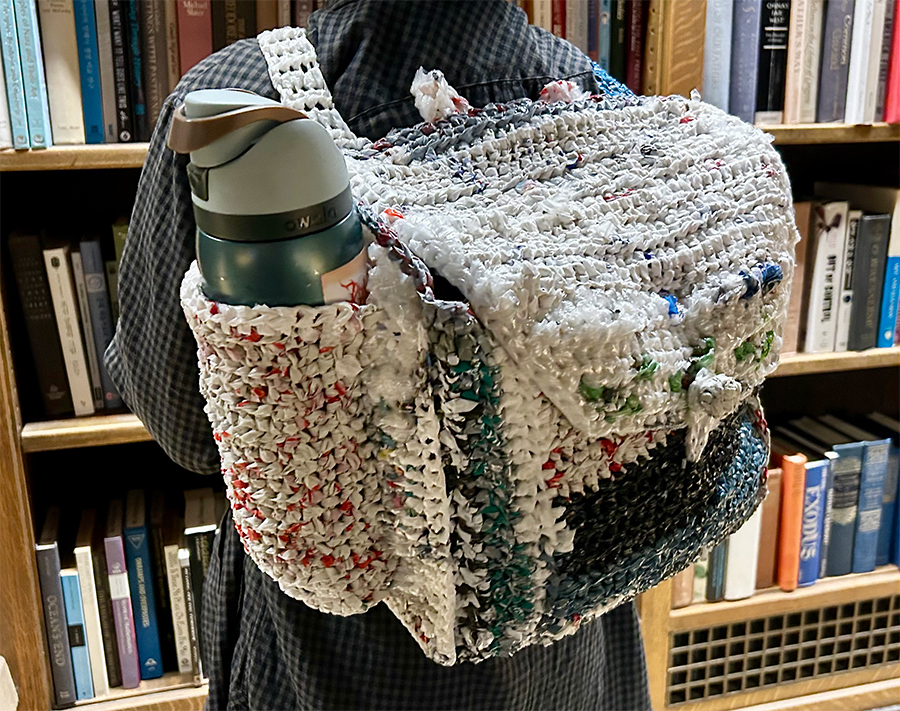
1st place winner: Transformative Trash by Asher Jayme
Artwork Description
It is important to me to create things that aren’t just aesthetically pleasing or eye-catching, but also to create things that are functional and that will be used. The plarn bag I created does both. It creates visually interesting pieces that become conversation starters about the issues around plastic, and doubles as a practical tool that I use in daily life. It also doubles as both a backpack and a crossbody bag. The more people are exposed to creative reuses, the more they question their own consumption habits. I want to instill in people the idea that everything has a purpose, you just have to find it.
How is your art piece relevant to your personal waste and/or waste you see at the UW?
It feels impossible to live completely sustainably. I cannot do my groceries or buy my meals without buying something that isn’t wrapped in plastic. I have always tried to do everything that I can to limit my plastic intake, but that has not stopped pollution from piling up. Throughout my life, I have learned that change does not begin with perfection but with participation. I cannot eliminate plastic production alone, but I can influence the conversations around it. Garbage and plastic production is currently unending, but the more that people engage in dialogue around it and find solutions, the closer we will get to stopping the needless waste.
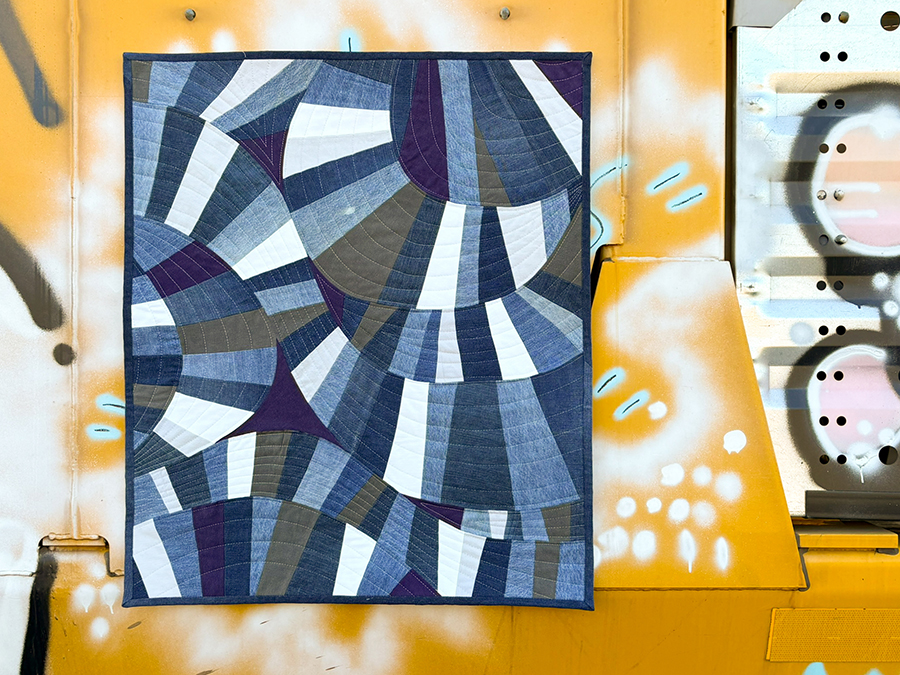
2nd place winner: Worn Again by Louise Wackerman
Artwork Description
One of the largest contributors of landfill waste and CO2 emissions is the textile industry, with approximately 500 million pairs of jeans discarded to landfills each year. I wear jeans daily. Rather than throw them away, as they wear out I collect them to transform into my textile art of choice, quilting. Jeans are cut on the straight grain to prevent the denim from warping or twisting at the seams. I cut the jeans into triangular pieces, against the straight grain. I sewed these pieces together to create the curved, twisting shapes as a contrast to the customary straight lines of jeans you are used to. Worn out clothing can have a beautiful second life, from a mundane working textile to a piece of art.
How is your art piece relevant to your personal waste and/or waste you see at the UW?
I started working at UWMC with a professional/casual dress code and casual Fridays. I remember how excited I was when they notified us that jeans were now acceptable every day! Since I work in construction, it made sense for my team. Since then it’s been jeans almost every day. But jeans wear out. And jeans are a major contributor of textile waste in landfills. Since I am a quilter, I have been stockpiling my worn out jeans to someday use in a quilt. This year is the year! I just happened to have one pair of purple jeans to throw in some ‘UW purple’ accents. The front, back and binding of this quilt are all upcycled from my collection of personal denim textile waste.
The UW Recycling team thanks this year’s participants and our 2026 judging committee!
The competition was part of this year's Campus Race to Zero Waste (previously RecycleMania). Campus Race to Zero Waste will be happening again in 2027 and we’re looking forward to planning next year’s contest. In the meantime, stay in touch with us on Instagram @uwrecycling or contact us at recycle@uw.edu.