Assessing the impacts of UW’s Green Wall

On the southeast side of Gould Hall, the UW Green Wall project perches, providing a home for plants, birds and insects while helping to conserve water and reduce energy needs.

A team funded by a Green Seed Fund grant is studying the Green Wall to quantify the effects of the green wall. The research is documenting plant growth, bird and insect sightings, water use, the impact on the urban heat island effect and building energy performance.

UW students work to restore one of Seattle's remaining swamps

What was once a bustling sawmill in the late 1800s is now home to more than 100 species of birds, turtles, ducks, and even a beaver family.

I’m talking about Yesler Swamp, one of the few true swamps remaining in Seattle and a unique part of Washington’s vanishing urban forest. It’s hidden in a grove of trees just east of the UW Center for Urban Horticulture, remaining a fairly unknown public area to this day.

UW group encourages restoration projects on campus

You may not have noticed, but as you walk around the UW campus more of those plants and flowers at your feet are species native to Puget Sound.

That’s because UW’s Society for Ecology Restoration student guild (SER-UW) native plant nursery has been working to restore areas on campus by increasing native species biodiversity and creating open spaces for students to engage with the natural world just steps from their residence halls. 

Walk your bike in high-traffic areas

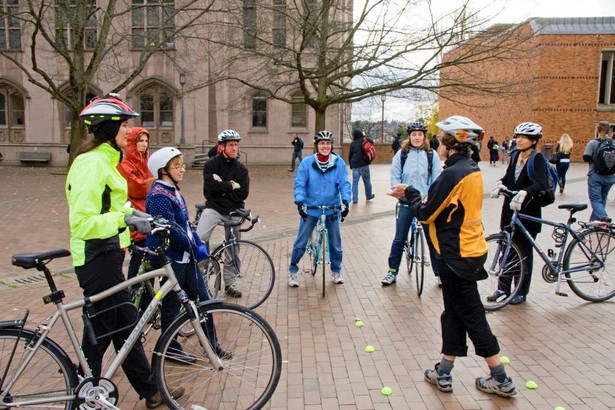
If you’re riding your bike in the middle of central campus, pay attention to pedestrians or you could face a $25 fine.

As part of the Bike Walk Zone, bicyclists are expected to walk their bikes when pedestrians are present in heavily trafficked areas, according to Transportation Services. Parts highlighted in blue in the map below mark where the zone begins and ends. You'll also find signs posted in the areas.

AASHE meeting connects UW with higher ed sustainability leaders

UW Associate Vice President Ruth Johnston traveled to Stanford University this spring to discuss strategic priorities and partnerships with fellow higher education sustainability leaders.

Johnston serves on the board of the Association for the Advancement of Sustainability in Higher Education (AASHE), which for the past 10 years has been strengthening campus sustainability efforts and making sustainable practices the norm within higher education.